Neuropeptide and monoamine circuits in stress, arousal, and affective behavior
How does the brain integrate internal state, past experience, and environmental information to guide behavior? We investigate how neuropeptides interact with norepinephrine, dopamine, and other neurotransmitter systems to shape arousal, learning, and responses to stress. Our approach integrates molecular profiling and spatial transcriptomics with neural circuit mapping, real-time imaging, quantitative behavioral analysis, and computational approaches to connect cellular diversity with circuit function.
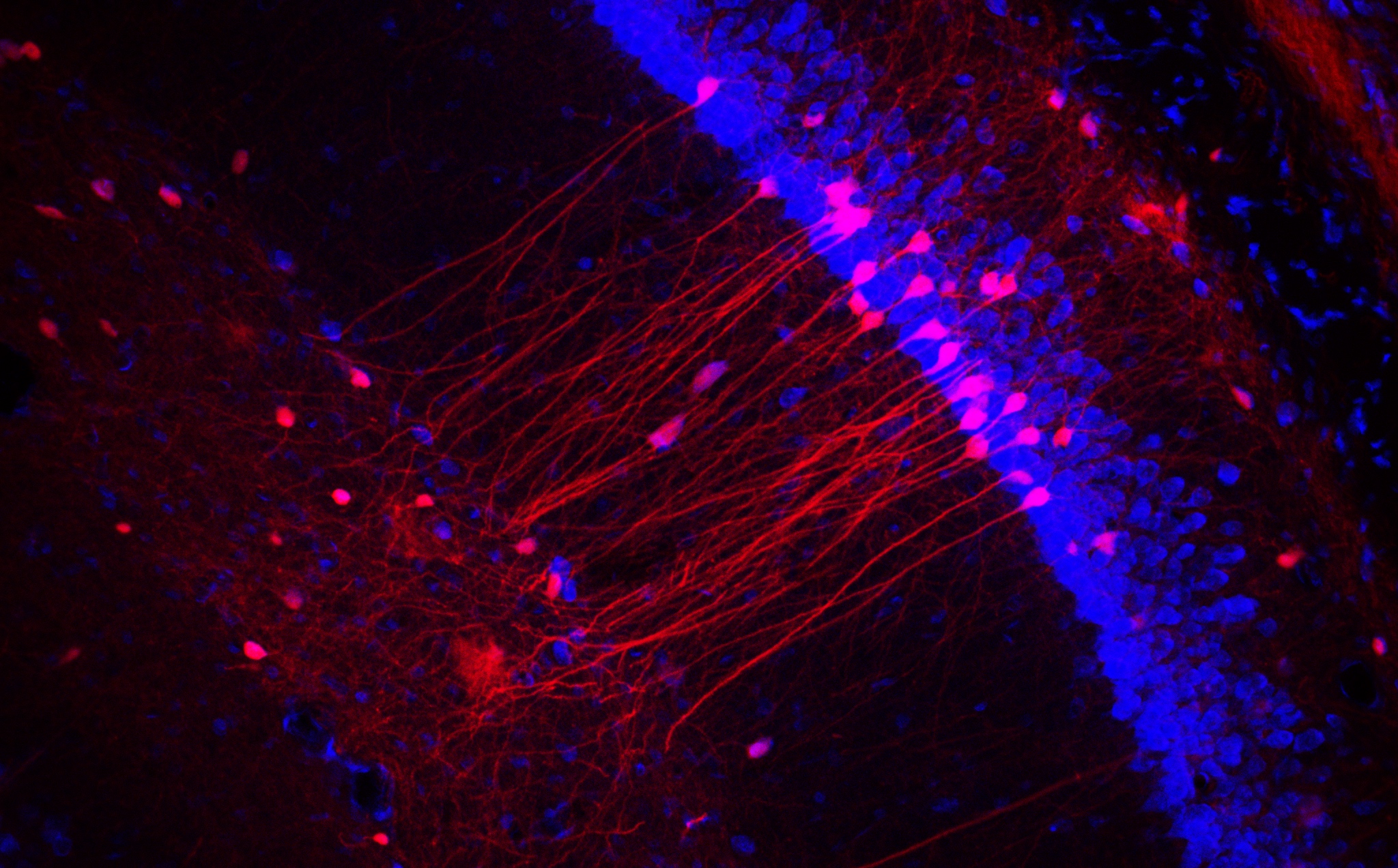
Our recent work identified diverse populations of neurons surrounding the locus coeruleus that regulate arousal and exploratory behavior (Luskin et al., Nature, 2025). We also demonstrated how sustained norepinephrine release in the dentate gyrus supports discrimination between safe and threatening contexts (Zhang et al., Nature Communications, 2025), and defined the relationship between locus coeruleus activity, movement transitions, and physiological arousal (Li et al., Cell Reports, 2025). These studies inform our investigation of how neuromodulatory signals alter the integration of information across brain regions and timescales, enabling adaptive behavior under changing conditions.
[Efforts supported by: NIMH, NIDA]
GPCR signaling and integration in stress, motivation, and pain
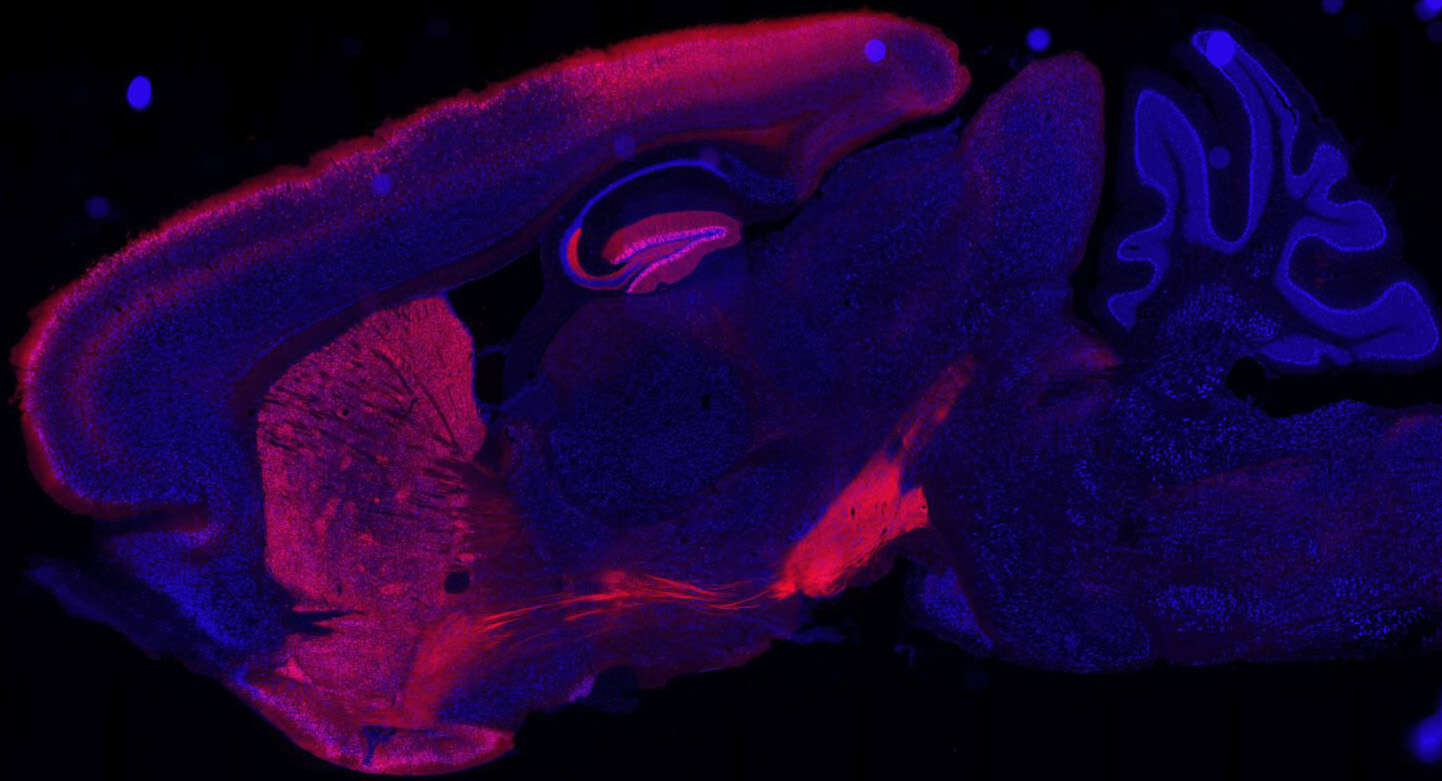
G protein–coupled receptors (GPCRs) translate neurochemical signals into changes in cellular activity and communication. We investigate how receptor identity, cellular location, and downstream signaling determine how neurons integrate their inputs and influence behavior. Our work combines receptor pharmacology, molecular and genetic approaches, optical tools, and computational analysis, with a particular interest in opioid, nociceptin, adrenergic, and cannabinoid systems.
A central goal is to understand how local receptor signaling produces coordinated changes in circuit function. Our recent work demonstrated that rapid dynorphin release in the dorsomedial striatum engages presynaptic kappa opioid receptors to regulate amygdala input and promote goal-directed action (Gowrishankar et al., Cell, 2026). This work connects the timing of endogenous peptide release to synaptic regulation and behavioral output.
Complementary tool development allows us to measure and manipulate these processes directly. In collaborative work, we developed NOPLight to monitor endogenous nociceptin release during behavior (Zhou et al., Nature Communications, 2024). With Lin Tian and colleagues, we developed κLight and related opioid biosensors to reveal the dynamics of endogenous opioid signaling during rewarding and aversive experiences (Dong et al., Nature Neuroscience, 2024). To complement these measurements, we developed a photoswitchable GPCR-based tool for reversible inhibition of neurotransmitter release (Copits et al., Neuron, 2021) and, in collaboration with Ofer Yizhar and colleagues, contributed to the development of a bistable inhibitory optoGPCR for multiplexed optical control of neural circuits (Wietek et al., Nature Methods, 2024). Together, these approaches support mechanistic tests of how GPCR signaling adjusts the strength and timing of information flow through neural circuits.
[Efforts supported by: NINDS, NIDA, NIH BRAIN Initiative]
Stress, reward, and the computational control of motivated behavior
Motivated behavior requires the brain to integrate internal needs with learned predictions, effort, and changing outcomes. We study how endogenous opioids, nociceptin, endocannabinoids, and monoamines regulate reward seeking, consumption, and the balance between approach and avoidance. We combine measurements of transmitter release and neural population activity with machine learning–based behavioral analysis to investigate the computational principles underlying motivation (including gain control, information integration, and credit assignment).
Our work identified an endogenous opioid circuit linking the dorsal raphe and nucleus accumbens that regulates reward consumption according to internal state (Castro et al., Nature, 2021). We also identified a paranigral ventral tegmental nociceptin circuit that constrains motivation for reward (Parker et al., Cell, 2019). Building on this foundation, our ongoing efforts examine how nociceptin signaling regulates persistence and disengagement in effort-based tasks, and how these circuits influence decisions to approach rewards or avoid potentially adverse outcomes.
More recently, we demonstrated that endocannabinoids regulate engagement in reward seeking through retrograde gain control of a defined thalamostriatal circuit (Marcus et al., Nature, 2026). Together with our findings on dynorphin-dependent control of goal-directed action (Gowrishankar et al., Cell, 2026), these studies reveal how local neuromodulatory signals tune circuit activity to shape ongoing behavior.
These findings motivate broader questions about how neuromodulation adjusts the influence of specific inputs (gain-control models), combines information across timescales, and helps link actions to their consequences (credit assignment). Our goal is to connect these computational questions to defined molecular and circuit mechanisms, revealing how adaptive motivation and approach–avoidance behavior are disrupted by stress, pain, and addiction.
[Efforts supported by: NIDA, NIMH]
Engineering tools for integrated neural and behavioral analysis
Understanding neuromodulation requires precise measurements of brain chemistry, circuit activity, and behavior within the same experimental framework. We develop and integrate genetically encoded biosensors, optical methods, miniaturized devices, and machine learning–based behavioral tools to connect molecular signals with the actions they influence. This work brings together neuroscience, pharmacology, engineering, and computational analysis to enable experiments across multiple scales.
With our collaborators, we developed fluorescent biosensors based on kappa, delta, and mu opioid receptors, enabling measurements of endogenous opioid signaling during rewarding and aversive experiences (Dong et al., Nature Neuroscience, 2024). We also developed an integrated microfluidic and fluorescence platform that combines localized drug delivery with recordings of neural activity or neurochemical signals in vivo (Piantadosi et al., Neuron, 2025). These technologies allow us to perturb specific signaling mechanisms while measuring their effects in behaving animals.
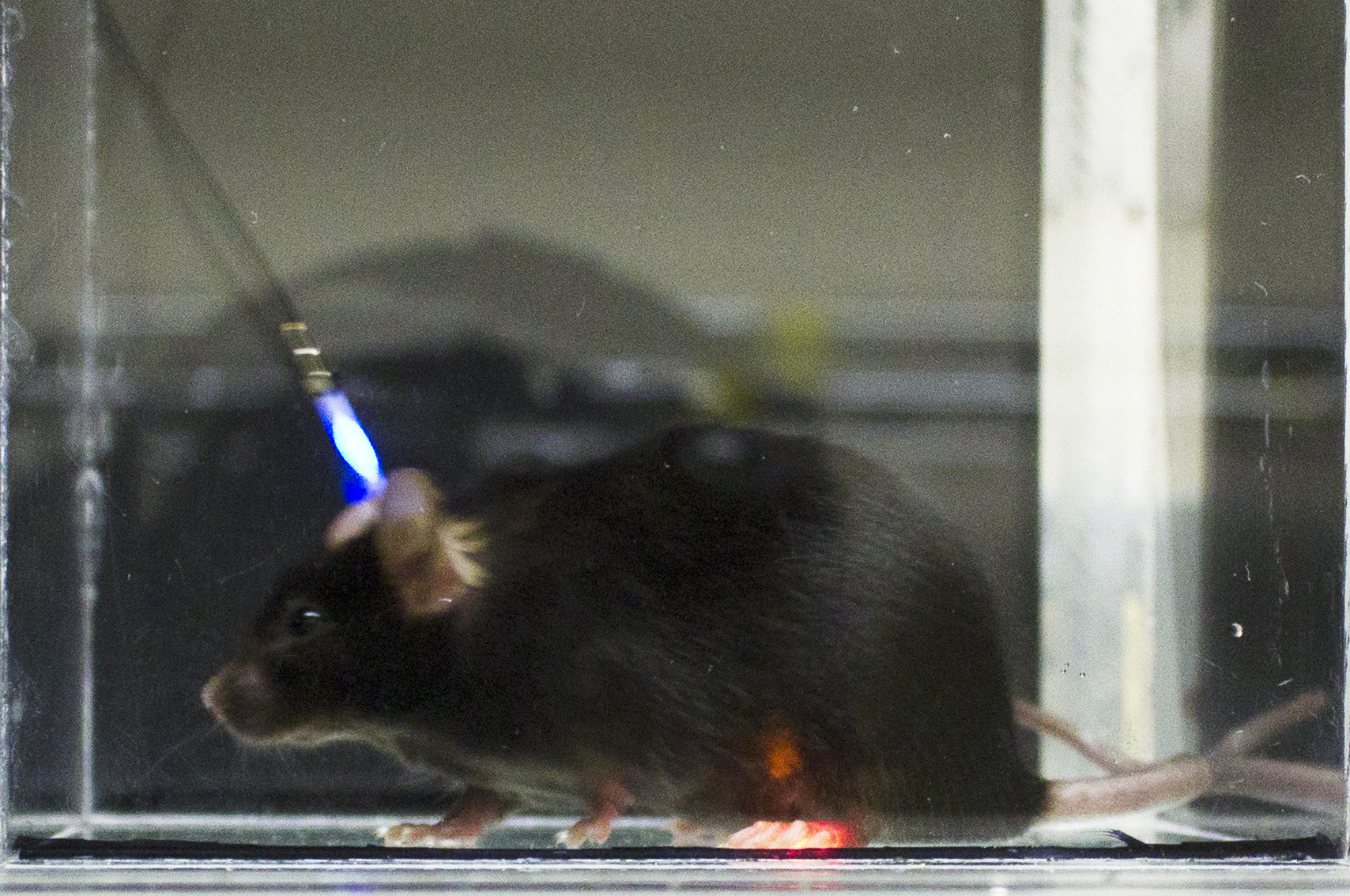
Our commitment to making research tools broadly accessible extends to two companies co-founded by Michael Bruchas. BioSyft develops machine learning–based computer vision tools for tracking anatomical landmarks, automatically classifying behaviors such as walking, rearing, and grooming, and quantifying movement features including gait, stride, and speed. These measurements provide a foundation for relating neural and neurochemical dynamics to specific actions and behavioral transitions. NeuroLux translates advances in miniaturized, wireless implantable devices into research tools for optogenetics, drug delivery, and physiological recording. This effort grew from our first wireless optogenetics study using injectable, cellular-scale optoelectronics (Kim, McCall et al., Science, 2013) and subsequent development of flexible, fully implantable, near-field wireless devices that established the foundation for the current platform (Shin et al., Neuron, 2017).
[Efforts supported by: NINDS, NIDA, NIMH]
Training opportunities Summary:
Our interconnected research programs offer rich training opportunities in molecular and systems neuroscience, pharmacology, engineering, computational analysis, biotechnology, and entrepreneurship. Trainees gain experience linking fundamental biological questions with tool development, quantitative approaches, and the translation of discoveries into practical technologies, including opportunities to explore startups and commercialization. Our training success includes NIH F31 and F32 fellowships and K-series career development awards, reflecting an emphasis on scientific independence, grant writing, and individualized mentorship. Across the research areas described above, we have trained multiple scientists who have established independent laboratories as principal investigators in academia or pursued research and leadership careers in industry and the broader private sector. We support a range of career goals and help trainees develop the scientific judgment, technical skills, and professional networks needed to pursue them.